
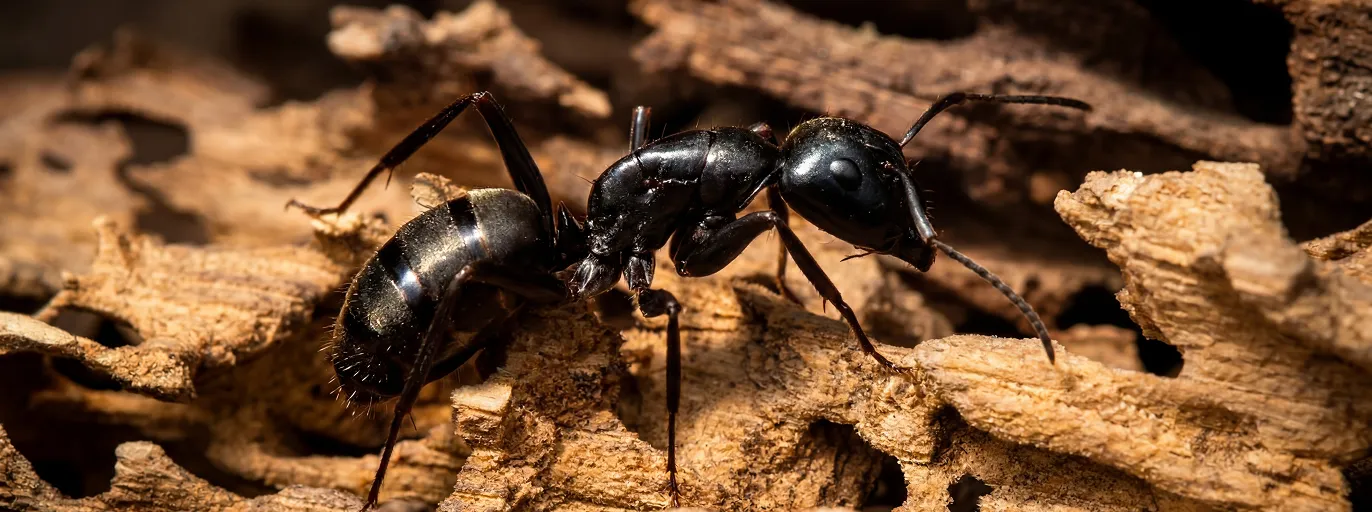
The Ant That Damages Wood, Not Just Counters

Carpenter ants tunnel into damp wood around window frames, eaves, and decks. We locate the parent nest and the satellites in Central Valley structures, then treat both.

Carpenter Ant Control treatment by Fortis Pest Control in the Central Valley.

A different kind of ant problem

Carpenter ants are not a kitchen nuisance. They are a structural pest. Where most ant species you see in Central Valley homes are foraging for food and following pheromone trails across countertops, carpenter ants are hollowing out wood inside your walls, eaves, and door frames to expand their nest. The damage builds quietly over months or years, and by the time you spot the workers indoors you are usually looking at an established colony already inside the structure.

Fortis treats carpenter ants under the HomeShield plan, starting at $49 per month. Because the treatment approach differs from other ants, we cover this species on its own page rather than lumping it in with the general ant service.

How to tell a carpenter ant from a termite

Most homeowners who call about carpenter ants are actually worried they have termites. Both insects chew into wood. Both swarm in spring. Here is how to tell which one you are dealing with.

  • 01

    Carpenter ant

    Pinched waist, bent antennae, back wings shorter than front wings when winged. Workers are large (a quarter to half an inch), usually solid black or black-and-red. Leaves behind a coarse sawdust pile (frass) near nest openings.

  • 02

    Termite

    Straight broad waist, straight antennae, four equal-length wings when swarming. No visible frass. Tunnels packed with mud, with damaged wood often looking intact until pressed.

We need to be clear about this part: Fortis does not service termites. Termite work in California requires a separate state license that we do not hold. If we identify termite activity during your inspection, we will tell you and point you to a reputable termite company. We would rather lose the job than treat the wrong pest.

Where carpenter ants nest in Central Valley homes

Carpenter ants do not eat wood, they excavate it. They prefer wood that is already damp, decayed, or compromised by a slow leak, which is why the same handful of spots come up over and over in Central Valley homes:

  • Window and door frames on the north and east sides of the house, where dew and irrigation overspray keep the wood damp longer.
  • Eaves, soffits, and fascia where roof flashing has failed or gutters have been clogged for a season or two.
  • Decks, patio covers, and pergolas built with untreated lumber sitting close to soil or sprinkler spray.
  • Around plumbing penetrations under sinks, behind dishwashers, and inside the wall cavity by the water heater.
  • Tree stumps, dead limbs, and firewood stacks within 30 feet of the home, which often serve as the parent nest while satellite nests live inside the structure.

If you have any of these conditions, mention them when you book your quote so the technician knows where to look first.

Pricing Made Simple

Pricing scales with home size.
Quotes are free.

HomeShield

Proactive residential service

Starting at

$49 /month

  • Proactive, recurring visits throughout the year
  • Covers Central Valley's most common pests
  • Establish a pest barrier around your home
  • Re-services between visits included

HomeShield+

HomeShield with expanded mosquito treatment.

Starting at

Add-on

  • Everything in HomeShield
  • Expanded with targeted mosquito treatments
  • Yard-focused coverage through warm months
  • Best for outdoor entertainment!!

EcoShield

HomeShield with an eco-friendly product line.

Starting at

Add-on

  • Everything in HomeShield
  • Eco-friendly active ingredients
  • Same coverage, gentler products
  • Complete peace of mind for your family and pets

What you can do before we arrive

A few small things help the visit run faster and the treatment work better.

Note where you have seen the workers

And at what time of day. Carpenter ants forage mostly at night, so a flashlight check around 10 p.m. often turns up trails the daytime inspection would miss.

Do not spray the trail

Contact spray kills the workers you can see and scatters the rest, which makes locating the nest harder and slows the bait down.

Address the moisture source

A dripping outdoor faucet, a roof flashing gap, or a sprinkler hitting the siding all give carpenter ants the damp wood they need. Fixing the moisture is often what keeps them from coming back.

How Fortis Treats Carpenter Ants

A carpenter ant visit is structured differently from a typical ant call. We are not chasing a counter trail, we are locating colonies.

01

Inspection

Pass through suspected nest sites, including damp-wood zones, frass piles, and the trees and stumps within the perimeter.

02

Locate parent and satellite nests

A mature colony almost always has one main nest plus one or more satellite nests inside the structure. We work to find both.

03

Targeted bait

Placed along active foraging routes so workers carry the active ingredient back to the queen.

04

Perimeter and void treatment

Around the foundation, eaves, and any access points we found during the inspection.

05

Follow-up visit

Included if activity persists, with re-treatment between scheduled visits at no extra charge under HomeShield.

Frequently
Asked Questions

Carpenter ants have a pinched waist, bent (elbowed) antennae, and back wings that are noticeably shorter than the front wings. Termites have a straight, broad waist, straight antennae, and four wings that are all the same length. Carpenter ants also leave behind a sawdust-like pile called frass near nest openings, with bits of insect parts mixed in. Termites pack their tunnels with mud and do not produce visible frass. If you are not sure, take a clear photo of the insect and any debris piles and we will confirm the species during your free quote.

No. Fortis does not service termites. Termite work in California requires a separate state license (Structural Pest Control Board Branch 3), and we only operate under the general pest license. If your inspection turns up termites, we will tell you honestly and recommend a reputable termite-specific company in the area.

Activity usually drops within two to three weeks of the initial treatment. Carpenter ants are slow to forage compared to other ant species and the bait needs time to travel through the colony to the queen. If we are still seeing workers after the first follow-up, the parent nest is often outside the immediate structure (a nearby tree or stump) and we adjust the treatment to address it.

Yes. The products we use are family-friendly once dry, typically 30 to 60 minutes after application. Your technician will let you know which areas to stay out of for the first hour. For households that want a gentler product line, our EcoShield add-on uses eco-friendly active ingredients.

The initial treatment handles the workers and the most accessible nest sites. Long-term control comes from the recurring HomeShield visits, which keep new colonies from establishing in the same damp wood or void spaces. Carpenter ants often have a parent nest plus several satellite nests, so the recurring perimeter work matters more for this species than for most others.

Get your Carpenter Ant Control quote

Share a few details about your pest problem and we'll get back to you with a free quote, usually within the same business day.

  • Free consultation

    Walk through your pest problem with a real Fortis tech, not a sales script.

  • Same-day quotes

    Most requests get a response within the same business day.

  • Family-friendly service

    Treatments are family-friendly once dry, typically 30 to 60 minutes after application.

  • Local and licensed

    Family and veteran owned. California license PR 9962.

Hours

Monday through Friday, 8am to 5pm Pacific

By submitting this form, you agree to be contacted by phone, text, or email about your request, and you agree to our Privacy Policy and Terms . Message and data rates may apply. Reply STOP to opt out.