
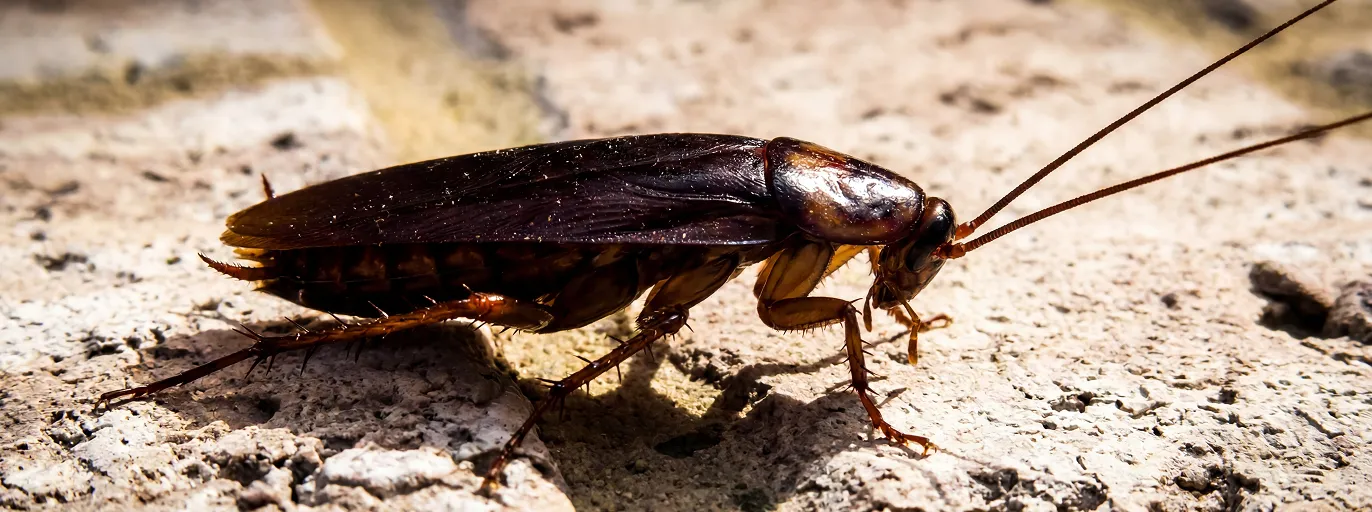
Cockroach Control for Allergens, Asthma, and Peace of Mind

German roaches breed indoors and load the air with allergens. American roaches push in from sub-areas and sewers. Health-driven treatment for Central Valley homes.

Cockroach Control treatment by Fortis Pest Control in the Central Valley.

Why cockroaches are a health issue, not just a sighting

Most pests in a Central Valley home are an inconvenience. Cockroaches are a health problem. Their droppings, shed skins, and saliva contain proteins that the CDC and EPA both recognize as significant indoor allergens and asthma triggers, with the strongest documented impact in children. Roaches also carry bacteria from sewers, garbage, and drains into the same kitchen surfaces you use to prep food. A single sighting on a kitchen floor usually means the harborage is already established somewhere within 10 feet, behind an appliance or inside a wall void.

Fortis treats cockroaches under the HomeShield plan, starting at $49 per month. The treatment approach is driven by what kind of roach you have, because the two most common species in Central Valley homes need very different handling.

The two species you are most likely to see

Most cockroach calls in the Fresno, Clovis, Hanford, and Visalia area come down to two species. A third (Oriental) shows up occasionally, mostly in older homes with sub-area access.

  • 01

    German cockroach

    Small, about half an inch, light tan with two dark stripes behind the head. Lives entirely indoors near food, breeds extremely fast, and drives most of the allergen and asthma pressure.

  • 02

    American cockroach

    Much larger, an inch and a half or more, reddish-brown with a yellow figure-eight mark behind the head. Lives outdoors and in sub-areas, wanders in one at a time through plumbing and vents.

Oriental cockroaches turn up occasionally in older homes with crawl-space access, especially in fall when temperatures drop and they push indoors. Treatment is similar to American roach work.

Where cockroaches harbor in Central Valley homes

Roaches need three things: warmth, moisture, and proximity to food. The harborage points repeat from house to house.

  • Behind and underneath the refrigerator, including the motor housing and drip pan.
  • Behind the dishwasher and under the kick plate, where leaks collect.
  • Under the kitchen sink, especially around the garbage disposal and the gap where the drain pipe enters the wall.
  • Inside cabinet hinges, drawer slides, and the void behind the toe-kick in kitchen cabinetry.
  • Bathroom plumbing chases behind the toilet and inside the vanity.
  • Sub-area access points and exterior vents (mainly for American and Oriental roaches).

If you know where you have seen activity, let the technician know on arrival so the inspection starts there.

Pricing Made Simple

Pricing scales with home size.
Quotes are free.

HomeShield

Proactive residential service

Starting at

$49 /month

  • Proactive, recurring visits throughout the year
  • Covers Central Valley's most common pests
  • Establish a pest barrier around your home
  • Re-services between visits included

HomeShield+

HomeShield with expanded mosquito treatment.

Starting at

Add-on

  • Everything in HomeShield
  • Expanded with targeted mosquito treatments
  • Yard-focused coverage through warm months
  • Best for outdoor entertainment!!

EcoShield

HomeShield with an eco-friendly product line.

Starting at

Add-on

  • Everything in HomeShield
  • Eco-friendly active ingredients
  • Same coverage, gentler products
  • Complete peace of mind for your family and pets

What you can do before we arrive

You do not need to deep-clean for the visit, but a few small steps make treatment more effective.

Clear under the sink and around the fridge

So the technician can access plumbing and the motor housing without moving stored items.

Store open food in sealed containers

And pull pet food up overnight. Bait works better when it is the most attractive food source in the harborage zone.

Address active leaks if you have them

A dripping pipe under the sink or a slow toilet seal leak gives roaches the moisture source they need. Fixing the leak is often what keeps the problem from coming back after treatment.

How Fortis Treats Cockroaches

A cockroach visit is methodical because the harborage is hidden by design.

01

Inspection

Flashlight and mirror behind appliances, inside cabinets, and around plumbing penetrations to confirm species and locate active harborage.

02

Gel bait

Placed inside cabinet hinges, drawer voids, and behind appliances where workers will encounter it and carry it back.

03

Insect growth regulator (IGR)

Applied alongside the bait, which prevents nymphs from maturing into reproductive adults. This is what actually breaks the German roach reproductive cycle.

04

Residual perimeter and crack-and-crevice treatment

Around foundation entry points, sub-area vents, and plumbing penetrations to handle American and Oriental roach pressure from outside.

05

Follow-up visits

Scheduled inside the first 30 to 45 days for confirmed German infestations, because the egg cases hatch on a delayed cycle and need a second pass.

Frequently
Asked Questions

Yes. The products we use are family-friendly once dry, typically 30 to 60 minutes after application. Most of the active treatment for German roaches is gel bait placed inside cabinets, behind appliances, and in voids where kids and pets cannot reach. For households that want a gentler product line, our EcoShield add-on uses eco-friendly active ingredients.

Size and color. German roaches are small (about half an inch long), light tan to brown, with two dark parallel stripes behind the head. They almost always stay indoors, near food and water. American roaches are much larger (an inch and a half or more), reddish-brown, with a yellowish figure-eight pattern behind the head. They show up from sewers, attics, and crawl spaces, often one at a time, which is what makes them so alarming when you see one.

German roaches develop resistance to common over-the-counter pyrethroid sprays within a few generations, and a generation is only about three months. Spray also scatters the population, drives survivors deeper into wall voids, and never reaches the egg cases (ootheca), which can each hold 30 to 40 nymphs. Effective cockroach treatment uses gel bait that workers carry back to harborage, plus an insect growth regulator that prevents nymphs from maturing.

Yes. Cockroach droppings, shed skins, and saliva are recognized indoor allergens and a documented asthma trigger, particularly in children. The CDC and EPA both list cockroach allergen as a leading cause of asthma symptoms in urban housing. Beyond the allergen issue, roaches carry bacteria from sewers and trash into food prep areas. Health risk is the main reason we treat for them, not just the visual.

It depends on the species and the severity. A confirmed German roach infestation usually needs an initial treatment plus one or two follow-ups in the first 30 to 45 days to break the reproductive cycle. After that, ongoing control is handled by the quarterly HomeShield visit. American roach control is mostly perimeter and entry-point work and folds into the standard recurring service.

Get your Cockroach Control quote

Share a few details about your pest problem and we'll get back to you with a free quote, usually within the same business day.

  • Free consultation

    Walk through your pest problem with a real Fortis tech, not a sales script.

  • Same-day quotes

    Most requests get a response within the same business day.

  • Family-friendly service

    Treatments are family-friendly once dry, typically 30 to 60 minutes after application.

  • Local and licensed

    Family and veteran owned. California license PR 9962.

Hours

Monday through Friday, 8am to 5pm Pacific

By submitting this form, you agree to be contacted by phone, text, or email about your request, and you agree to our Privacy Policy and Terms . Message and data rates may apply. Reply STOP to opt out.